


Miniature Collector's Palace with Lighting
Miniature Collector's Palace with Lighting
Couldn't load pickup availability
-
Ordered
- - -
Order Ready
- - -
Delivered

Miniature Collector's Palace with Lighting
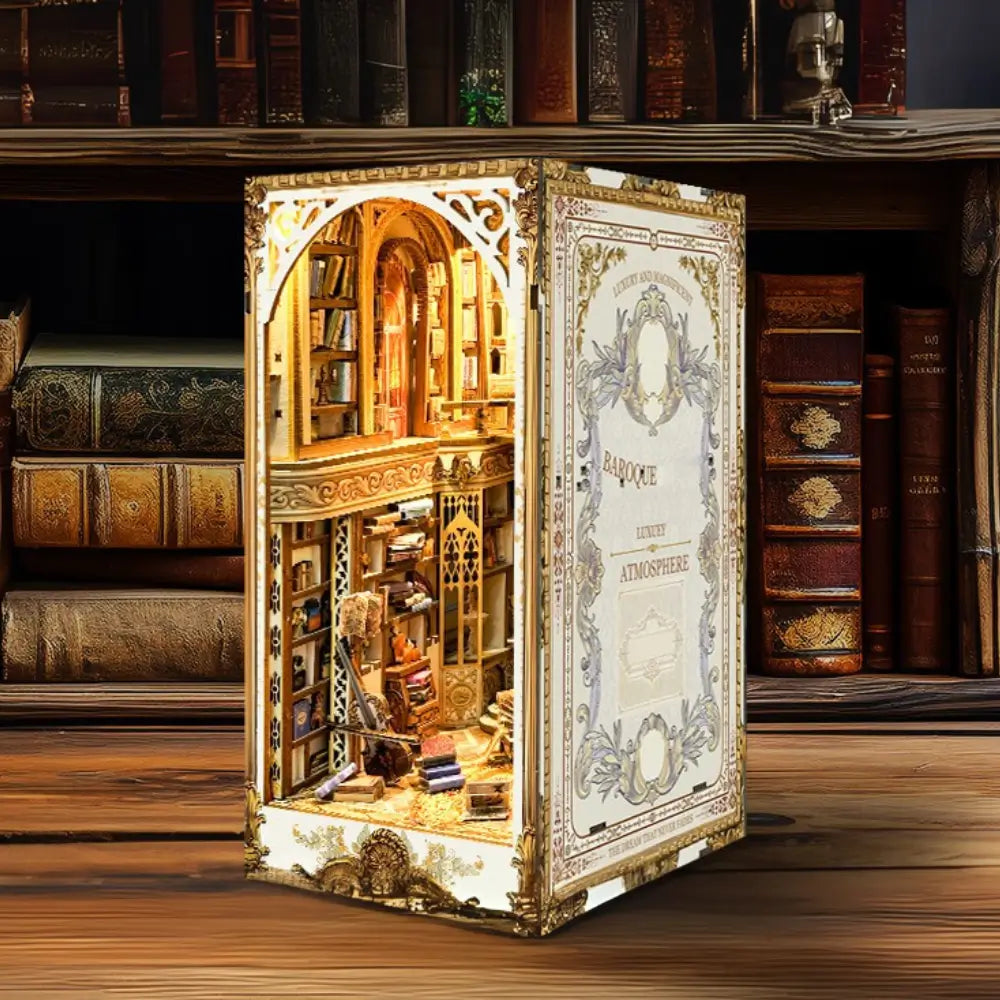
Gorgeous Manor is an elegant DIY set that lets you build a richly decorated book-nook palace in retro style. Inside the cut-out panels are intricate ornaments, golden details, and miniature furniture, creating an interior full of classic charm. Thanks to the included LED lighting, the whole piece takes on a beautiful glow that highlights the atmosphere of an old manor. It is an ideal project for people who love aesthetic decorations and handicrafts. The finished model makes a stunning decoration for a shelf, desk, or bookcase and is perfect as a gift.



Why Educational Toys Matter for Child Development
Play is learning in its purest form. When children engage with well-designed toys, they're not just having fun—they're developing essential skills that will benefit them throughout their lives.
Cognitive Growth: Educational toys challenge young minds to think, reason, and solve problems. Whether it's a simple shape sorter for toddlers or complex building sets for older children, these toys stimulate brain development and create new neural connections.
Physical Development: Active play with toys builds strength, improves coordination, and develops both fine and gross motor skills. These physical foundations are crucial for everything from writing to sports.
Emotional Intelligence: Through play, children learn to express emotions, develop empathy, and build self-confidence. Toys that encourage imaginative play help children process experiences and develop healthy emotional regulation.
Social Skills: Group play teaches children how to cooperate, negotiate, and communicate. These interpersonal skills are vital for success in school and throughout life.
Investing in quality, developmentally appropriate toys is investing in your child's future. The right toys provide the foundation for lifelong learning, creativity, and emotional well-being.
Social & Emotional Growth + Problem-Solving
Key Developmental Benefits of Educational Toys
Choosing the Right Toys for Your Child
Quality over quantity: A few well-chosen, developmentally appropriate toys are more valuable than a large collection. Look for toys that match your child's current developmental stage and interests.
Safety first: Always check age recommendations and safety certifications. Toys should be free from small parts that could be choking hazards and made from non-toxic materials.
Open-ended play: Toys that can be used in multiple ways encourage creativity and extended play. Blocks, building sets, and art supplies offer endless possibilities.
Encourage active play: Balance screen time with toys that encourage physical movement and outdoor exploration.
Rotate toys: Keeping some toys stored away and rotating them periodically maintains novelty and extends the life of your toy collection.
Play together: The most valuable toy is one that brings you and your child together. Playing with your child enhances the developmental benefits and strengthens your relationship.
Deeper Insights: Understanding Developmental Milestones
Cognitive Development: Building Thinking Skills
Cognitive Development: Building Thinking Skills
What it means: Cognitive development involves the growth of thinking, reasoning, and problem-solving abilities. It includes memory, attention span, language development, and the ability to understand concepts.
How toys help: Puzzles, building blocks, and educational games provide hands-on learning experiences. When children manipulate objects, experiment with cause-and-effect, and solve problems, they strengthen their cognitive abilities. Toys that encourage counting, sorting, and pattern recognition are particularly valuable for developing mathematical thinking.
Age-appropriate examples: Infants benefit from toys with different textures and colors. Toddlers thrive with shape sorters and simple puzzles. Preschoolers enjoy more complex building sets and games with basic rules. School-age children benefit from strategy games and STEM-focused toys.
Motor Skills: Developing Physical Abilities
Motor Skills: Developing Physical Abilities
What it means: Motor skills are divided into two categories: gross motor skills (large movements like running and jumping) and fine motor skills (small, precise movements like grasping and writing).
How toys help: Toys that encourage movement—balls, climbing structures, and ride-on toys—develop gross motor skills. Toys requiring manipulation—beads to string, small blocks to stack, and drawing materials—develop fine motor skills. Both are essential for physical development and independence.
Why it matters: Strong motor skills enable children to participate in sports, develop self-care abilities like dressing and eating, and eventually master academic skills like writing. Toys that challenge children physically help them build confidence in their bodies.
Creativity & Imagination: Fostering Innovation
Creativity & Imagination: Fostering Innovation
What it means: Creativity is the ability to generate new ideas and express them in unique ways. Imagination is the capacity to form mental images and scenarios beyond immediate reality.
How toys help: Open-ended toys like art supplies, building materials, and pretend play sets have no single 'correct' way to use them. This freedom allows children to explore, experiment, and create without fear of failure. Imaginative play with dolls, action figures, and playsets helps children develop storytelling abilities and emotional understanding.
Long-term benefits: Creative thinking is increasingly valued in education and careers. Children who engage in creative play develop confidence in their ideas, learn to take risks, and develop problem-solving approaches that extend beyond traditional solutions.
Social & Emotional Development: Building Relationships
Social & Emotional Development: Building Relationships
What it means: Social development involves learning to interact with others, while emotional development includes understanding and managing feelings, developing empathy, and building self-esteem.
How toys help: Toys designed for group play teach cooperation and communication. Board games teach turn-taking and following rules. Pretend play helps children understand different perspectives and develop empathy. Toys that allow for success build confidence and positive self-image.
Emotional benefits: Through play, children learn to express emotions in healthy ways, develop coping strategies, and build resilience. Playing with others teaches them about friendship, conflict resolution, and the joy of shared experiences. These skills form the foundation for healthy relationships throughout life.
Unlocking Your Child's Potential Through Play
Toys are far more than just entertainment—they are powerful tools for childhood development. When children play, they're actively building the cognitive, physical, and emotional foundations that will shape their future. Discover how the right toys can nurture every aspect of your child's growth and development.